
2025 Long Beach Island Real Estate Market Recap | Prices, Inventory, and Trends
Executive Summary
The Long Beach Island real estate market in 2025 remained exceptionally strong, even as appreciation normalized from the rapid pace of prior years. Sales activity held steady, inventory tightened further, and buyer demand continued to outweigh supply. While price growth slowed compared to the post covid surge, market fundamentals stayed healthy and competitive across nearly every segment.
In 2025, the buyers who did the best on Long Beach Island were the ones who looked for value instead of simply chasing the lowest price.
Key highlights from 2025 include:
• 419 total residential sales compared to 423 in 2024
• Average sale price of $2,477,761 and median sale price of $2,250,000
• 7.1 percent year over year appreciation island wide
• Average days on market fell to 77 from 101 in 2024
• Extremely limited single family inventory throughout the year
Overall Market Performance
Sales Volume
Total residential sales on Long Beach Island finished 2025 at 419 transactions, nearly identical to 2024 levels. This stability is notable given higher interest rates and ongoing affordability concerns in many coastal markets. LBI continues to benefit from a long term ownership base and a lack of forced selling.
Pricing and Appreciation
The average sale price in 2025 reached $2,477,761, while the median sale price landed at $2,250,000. Island wide appreciation measured 7.1 percent year over year. While this represents a slowdown from the 11.46 percent growth seen previously, it remains a strong and healthy rate of appreciation for a mature coastal market.
Price growth did not stall. Instead, it normalized to levels that better reflect long term sustainability rather than speculative excess.
Days on Market
Average days on market dropped to 77 in 2025, down from 101 in 2024 and 83 in 2023. Homes that were priced correctly and presented well continued to trade efficiently despite a more selective buyer pool.
Sale to List Price Ratio
Sale to list price ratios strengthened again in 2025, reaching 97.8 percent. This compares to 97.0 percent in 2024 and 96.5 percent in 2023. Pricing adjustments that did occur were largely the result of sellers testing the market early, not weakening demand. Distressed sales remain extremely rare on Long Beach Island.
Inventory and Supply Dynamics
Inventory Levels
Single family home inventory on Long Beach Island remained extremely constrained throughout 2025. Active listings steadily declined as the year progressed, briefly ticking up during the fall market before dropping sharply again in November and December. Inventory reached one of the lowest levels ever recorded, falling into the upper 70s to low 80s island wide.
August marked the peak inventory month for the year, though even peak levels remained historically low.
Seller Behavior
A defining theme of the LBI market is that most owners do not need to sell. This dynamic allows sellers to be patient and test pricing, particularly when inventory is limited. Sellers who priced appropriately early in their listing period were consistently rewarded with strong buyer interest and efficient sales.
Town by Town Market Performance
Loveladies
Loveladies once again outperformed the island average. Its low density, larger lots, and quieter beaches continue to attract buyers seeking exclusivity. It also recorded the highest number of sales in 2025, reinforcing its position as one of the most desirable markets on the island.
North Beach
North Beach followed a similar trend, benefiting from limited inventory and a buyer base that values privacy and spacing. Demand remained strong throughout the year.
Harvey Cedars
Average sale price in Harvey Cedars reached $2,567,543. The town continues to attract buyers looking for a balance between residential feel and access to amenities.
Surf City
Surf City recorded an average sale price of $2,324,368. While demand remained solid, a higher concentration of older housing stock selling below the island average kept overall pricing lower relative to other towns.
Ship Bottom
Ship Bottom averaged $1,669,614 in 2025. Its proximity to the bridge and prevalence of older homes traditionally place it below the island average. It remains one of the more accessible entry points to Long Beach Island ownership.
Long Beach Township
Long Beach Township posted one of the strongest average sale prices on the island at $2,707,088. This was supported by consistent demand across multiple sections and continued redevelopment activity.
Beach Haven
Beach Haven averaged $2,671,161 in 2025. As the heart of Long Beach Island, it benefits from walkability, dining, entertainment, and a mix of historic charm and newer construction.
Block Location Pricing Trends
Block location continues to play a major role in pricing on Long Beach Island.
Bayside
Bayside properties remained the most affordable block location in 2025, trading approximately 2.7 percent less than bayblock properties. Not every neighborhood offers bayside streets, but where available they continue to provide value oriented opportunities.
Bayblock
Bayblock properties traded approximately 2.7 percent higher than bayside homes. Despite common assumptions, bayblock can command a premium due to open views, direct bay access without crossing roads, and ease of launching kayaks or enjoying sunsets.
Oceanside
Oceanside homes traded 27.2 percent higher than bayside properties and 24.5 percent higher than bayblock homes. Proximity to the ocean continues to carry long term value.
Oceanblock
Oceanblock properties represented the top premium among non waterfront homes, trading approximately 12.4 percent higher than standard oceanside locations. Not having to cross any streets to access the beach remains highly valued by buyers.
Waterfront properties including oceanfront, bayfront, and lagoonfront sit above all other categories.
Buyer Behavior and Demand Trends
Buyer Profile
New Jersey buyers dominated the market in 2025, with additional demand coming from Pennsylvania, Philadelphia, and New York City. Compared to prior years, fewer buyers were relocating full time. Instead, demand skewed toward second home ownership and seasonal use, particularly for summer and fall living.
Cash vs Financing
Cash buyers accounted for roughly half of all transactions. Interest rates had little impact on buyer demand but did influence seller behavior. Many owners with favorable existing mortgages chose not to sell, further constraining supply.
Price Points with Strongest Demand
The most competitive segment of the market was tear down properties priced in the low to mid $1 million range. This category offered the largest buyer pool and clear redevelopment potential.
Buyer Hesitation
Buyers were most hesitant with homes in the mid $2 million range that required significant renovations. Rising construction costs, time commitments, and uncertainty all contributed to increased buyer caution.
Buyers showed greater flexibility on condition than on location, consistently prioritizing lot quality and proximity to amenities.
Rental Market and Investment Performance
Rental Demand
Summer rental demand in 2025 remained steady. While not as strong as the peak covid years, the market continued to perform well. Luxury rentals at the $40,000 to $50,000 per week level became less common, but homes priced realistically were largely fully booked by summer.
Rental Rates
Average weekly rental rates increased slightly island wide, averaging approximately $6,500 per week. Many owners are modestly increasing rates for the 2026 season.
Best Performing Properties
Homes with pools priced between $10,000 and $15,000 per week performed exceptionally well, particularly pet friendly homes. Older homes with strong character and charm also exceeded expectations when priced appropriately.
New Construction and Redevelopment Trends
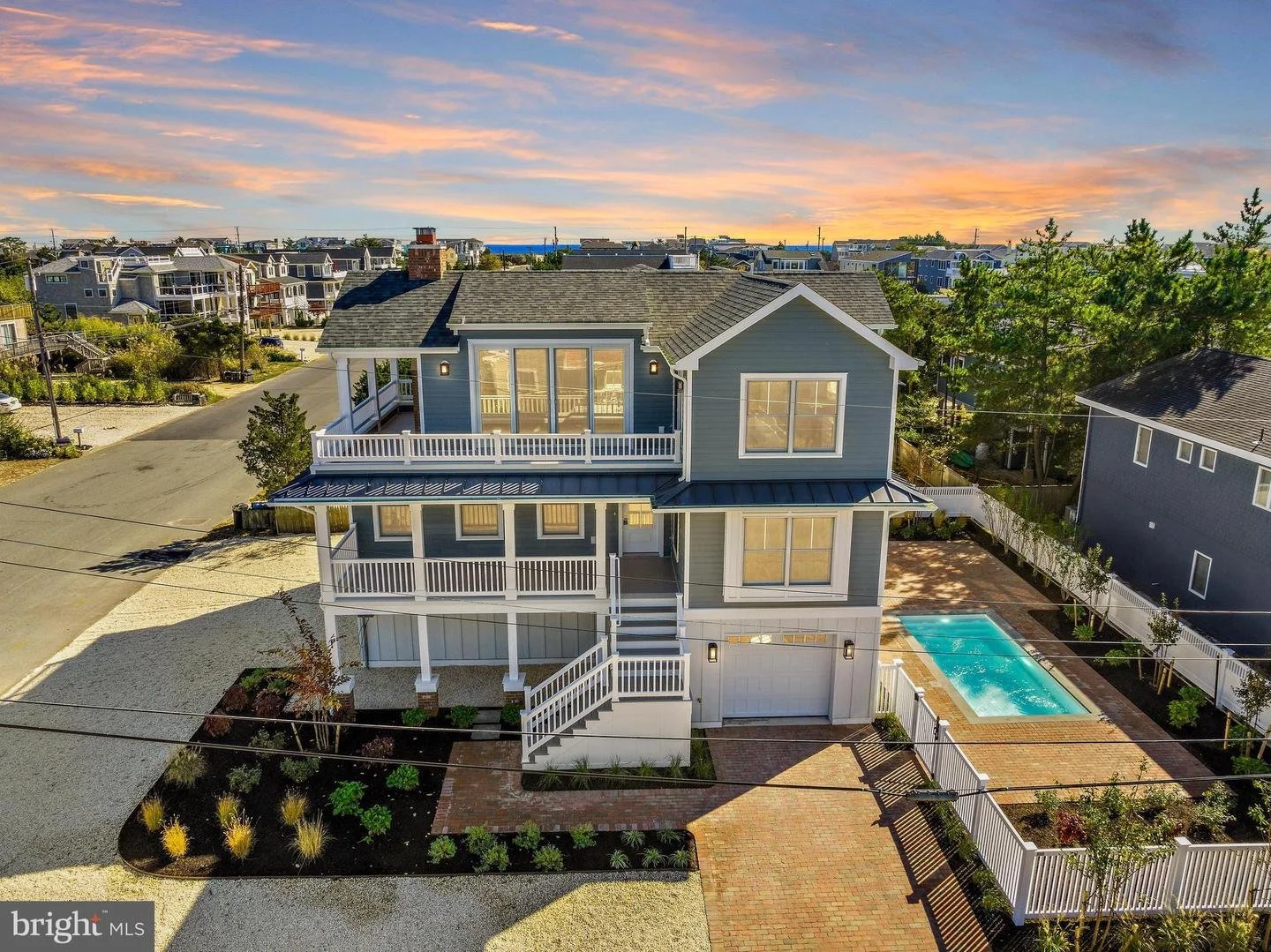
New construction remained very active in 2025, with 42 new construction sales compared to 36 the prior year. Tear down values increased, reflecting continued confidence in long term land value.
Buyer preferences shifted toward three levels of living space with first floor bedrooms and bathrooms. This layout supports multigenerational use and improves rental flexibility by allowing more guests to comfortably occupy the home.
Policy and Risk Considerations
Buyers frequently asked about the REAL initiative in 2025. While it did not materially impact purchasing decisions, it remains a future policy consideration worth monitoring. Overall, insurance costs, flood zones, and bulkhead conditions did not meaningfully alter buyer behavior during the year.
2026 Market Outlook
Looking ahead, the Long Beach Island real estate market remains well positioned. Inventory is expected to stay limited, and buyer demand continues to exceed supply. While no one can predict the future, current fundamentals suggest steady pricing supported by long term demand.
The biggest risk moving forward is affordability, as more buyers become priced out of the market. The biggest opportunity lies in identifying value driven purchases, particularly properties with strong lot characteristics, views, and proximity to amenities.
A common misconception is that prices cannot continue rising. That sentiment has existed on Long Beach Island for decades. The reality is that prices are where they are today, and successful buyers focus on value within the current market rather than waiting for dramatic pullbacks.
Final Thoughts
The 2025 market reinforced Long Beach Island’s position as a resilient, supply constrained coastal market. Buyers who understood the nuances of location, lot quality, and long term value were rewarded. As the market moves into 2026, informed decision making remains the most powerful advantage.
